
Which toasters are highly recommended for Alzheimer’s patients?
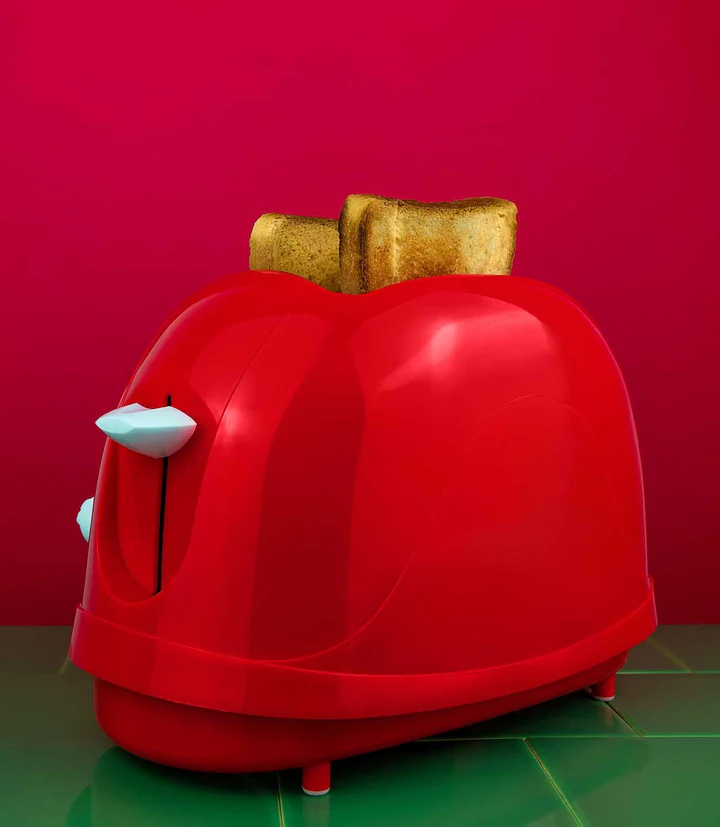
The Cuisinart CPT-122 Compact Toaster is the safest everyday choice for most people with Alzheimer's or dementia — one lever, one dial, automatic pop-up, and a compact footprint that stays put on the counter.
Check Price on Amazon →#ad — As an Amazon Associate we earn from qualifying purchases.
No toaster is officially "designed for Alzheimer's patients." What you're really shopping for is a toaster whose ordinary features — automatic shut-off, dead-simple controls, a cool exterior — happen to remove the specific risks that come with memory loss and confusion. After going through this with my own family, I've learned that the right toaster isn't about fancy features. It's about removing decisions.
Below are the three pop-up toasters I recommend, plus one toaster oven for households that need one — and just as importantly, the features you should actively avoid.
What to Look For in a Toaster for Someone with Alzheimer's
1. Automatic shut-off and pop-up. The single most important feature. The toaster must stop on its own, every time, with no way to accidentally keep it running. A person with dementia may walk away mid-task and not return — the appliance has to be safe when that happens, not if.
2. One lever, one dial. Every extra button is a chance for confusion or frustration. The ideal toaster works exactly like the ones your loved one used for fifty years: bread in, lever down, toast up. Familiarity is a safety feature — muscle memory often outlasts short-term memory.
3. Cool-touch exterior. Thinner skin and slower reflexes make burns from a hot chassis a real risk, especially when someone reaches over or around the toaster.
4. Wide slots and high-lift. Wide slots prevent forcing bread in (and discourage prying with a knife). A high-lift function raises toast well clear of the slot so nobody reaches inside.
5. A stable, weighted base. Lightweight toasters slide and tip when someone tugs the cord or bumps the counter.
Quick Comparison
| Toaster | Best For | Key Safety Feature | Auto Shut-Off | |
|---|---|---|---|---|
| Cuisinart CPT-122 | Most people — simplest overall | One dial, one lever, compact | Yes (auto pop-up) | Price |
| Hamilton Beach Keep Warm | Slower mornings | Keep-warm holds toast without reheating | Yes | Price |
| Oster Long Slot | Bagels, thick or odd-sized bread | Long slots — no forcing bread in | Yes | Price |
| Black+Decker 4-Slice Toaster Oven | Households that need an oven | 30-minute timer that shuts off by itself | Yes (timer-based) | Price |
#ad — links above are Amazon affiliate links.
1. Cuisinart CPT-122 Compact Toaster — Best Overall
This is the toaster I'd hand to almost any family dealing with early or middle-stage dementia. There is essentially nothing to learn: one lever, one browning dial, and buttons for bagel, defrost, and cancel that can simply be ignored. The toast pops up on its own and the unit shuts off — there is no mode where it keeps heating unattended.
The compact size matters more than it sounds. It fits against the backsplash in a consistent spot, and a smaller footprint means less counter clutter around a hot appliance — one of the quiet fire risks in a dementia household (a stray paper towel against a toaster is all it takes).
2. Hamilton Beach Keep Warm Toaster — Best for Slow Mornings
Mornings with dementia don't run on a schedule. Someone may put bread in, get distracted, and come back ten minutes later to cold toast — then re-toast it, which is how burnt toast and smoke alarms happen. The keep-warm feature on this Hamilton Beach solves that specific problem: the toast pops up, stays warm in the slots without continuing to cook, and there's no reason to run a second cycle.
It also has wide slots and a high-lift lever, so stiff fingers never have to reach near the heating elements.
3. Oster Long Slot Toaster — Best for Bagels and Thick Bread
The danger nobody warns you about: when bread doesn't fit, people with dementia don't stop — they push, or worse, reach for a knife to help it along. The Oster's extra-long slots take two regular slices, one long artisan slice, or a full bagel half without any forcing. Removing the "it doesn't fit" moment removes the improvisation that follows it.
Controls are a simple dial and lever, and the anti-jam feature shuts the unit off automatically if something gets stuck rather than continuing to heat.
What About Toaster Ovens? One Safe Pick — and a Warning
If your household genuinely needs a toaster oven, choose one where the timer is the power switch. On the Black+Decker 4-Slice Toaster Oven, the mechanical 30-minute timer runs down and shuts the oven off, period. There's a bell, there are two plain dials, and there's no way to leave it running indefinitely by accident.
The warning: many toaster ovens — including some marketed as having "auto shut-off" — also have a "Stay On" setting. That mode disables the timer entirely so the oven runs until someone turns it off. For a person with memory loss, a Stay On dial position is a fire waiting for a distracted moment. If a toaster oven you're considering has one, either pass on it or physically block that dial position (a dab of hot glue or a printed dial overlay works).
For most families, though, my advice is simpler: a pop-up toaster is safer than any toaster oven. It shuts off by design, not by timer, and there's no door, rack, or broil setting to misuse. If reheating meals is the real need, a simple microwave is the safer tool — see our guide to safe kitchen appliances for seniors with dementia.
Caregiver Notes: Making Any Toaster Safer
These habits matter as much as the toaster you buy:
- One spot, forever. Keep the toaster in the same visible place on the counter. Familiar placement preserves independence longer than any feature.
- Mark the setting. Put a small colored sticker at the browning setting your loved one prefers, so the dial never needs to be "figured out."
- Cover the extras. A strip of painter's tape over unused buttons (bagel, defrost) removes choices without removing the appliance.
- Clear the blast radius. No paper towels, bread bags, curtains, or napkin holders within arm's reach of the toaster. Empty the crumb tray monthly — crumbs are fuel.
- Unplug in later stages. When supervision becomes constant anyway, unplugging between uses turns the toaster into an appliance that only works when you're there.
- Supervise the first week. Watch quietly the first several uses of any new appliance. You're not testing them — you're learning which step, if any, causes hesitation, so you can solve that one thing.
For the rest of the kitchen, see our guides to safe coffee makers for seniors and adaptive kitchen tools.
Often yes, in early and middle stages — a pop-up toaster with automatic shut-off is one of the safest kitchen appliances there is, and keeping familiar routines supports independence and dignity. The honest answer is that it depends on the person and the stage, which is why supervised trial runs matter more than any product review.
Automatic shut-off. The appliance must be safe when — not if — the person walks away mid-task. Everything else (simple controls, cool-touch exterior, wide slots) reduces frustration and burns; auto shut-off is what prevents fires.
A pop-up toaster, almost always. It shuts off mechanically every cycle. Toaster ovens depend on timers, and many have a "Stay On" mode that defeats the timer entirely.
Not as a first step. Taking away familiar tasks too early can accelerate loss of confidence and independence. Swap in a safer model, simplify it (stickers, tape), supervise, and only remove it when supervised use is no longer safe.
Buttered bread, frosted pastries, and anything wrapped in foil — all common mistakes with memory loss, and all fire or shock risks. A small printed reminder card next to the toaster ("bread only — no butter first") genuinely helps.
Prime for $6.99 a Month
If you or a family member receive government assistance, Prime Access gives you all of Prime — free delivery, Prime Video, Amazon Music — at half price.
See If You QualifyThe Care Pack Store
Every product in our Amazon store is something a caregiver in our community has actually used and recommends — from daily-living aids to comfort items.

Cory Clark
Cory Clark is the founder of Care Pack Club and a firsthand caregiver with experience supporting both aging grandparents and parents through the challenges of elder care. After spending years navigating assisted living transitions, cognitive decline, and the emotional weight that comes with caring for the people who once cared for you, Cory created this site to share what he learned. Every article reflects a real situation, a real question, or a real decision that families face. Care Pack Club exists because Cory couldn't always find the answers he needed, and decided to document them for the next family that goes looking.
Keep reading

Long Distance Caregiving: How to Look After a Parent From Far Away
As an Amazon Associate, Care Pack Club earns from qualifying purchases. If you buy through our links, we may earn a small…

Elderly Parent Refuses Help? What to Say and Do When Your Mom or Dad Says No
As an Amazon Associate, Care Pack Club earns from qualifying purchases. If you buy through our links, we may earn a small…