
Safe grills for seniors with dementia
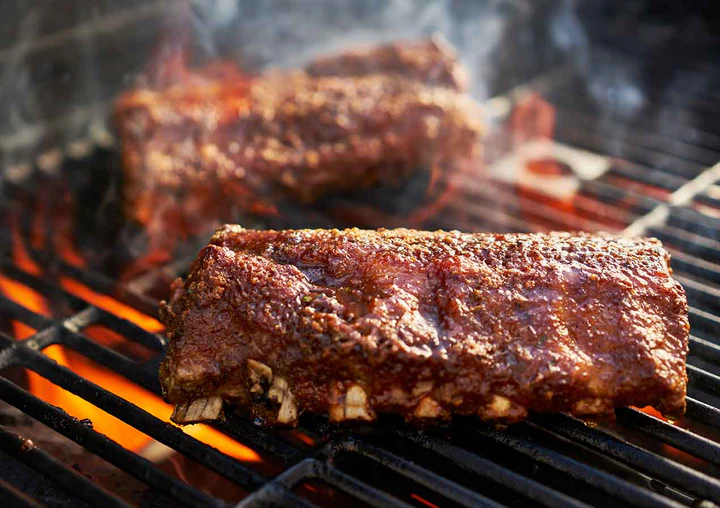
For most families, the safest grill for a senior with dementia is a simple electric grill like the George Foreman Indoor/Outdoor Grill — no gas, no flame, no charcoal, one temperature dial, paired with an outlet timer so it can never be left on overnight.
Check Price on Amazon →#ad — As an Amazon Associate we earn from qualifying purchases.
Grilling is one of those routines worth protecting. For a lot of older men and women, being “the one who grills” is identity, not just cooking and taking it away too early costs confidence that’s hard to get back. The goal isn’t to end grilling. It’s to change what kind of grill is standing on the patio.
Gas vs. Charcoal vs. Electric: The Honest Answer
Gas grills are the biggest risk. A burner knob left on or turned on without igniting releases propane until someone notices. With memory loss, “someone notices” is not a safety plan. If a gas grill stays in the picture, the tank valve must be closed after every use by a caregiver, and in later stages the tank should live somewhere else entirely.
Charcoal grills trade the gas leak for lighter fluid, open flame, and coals that stay dangerously hot for hours after the food is done long after the cooking is forgotten.
Electric grills remove nearly all of it: no fuel, no flame, no coals, and they can be controlled at the outlet which, as you’ll see below, is the single most useful trick in this whole guide. That’s why every recommendation here is electric.
What to Look For in a Grill for Someone with Dementia
1. Electric only. The safest fuel is a plug.
2. One dial. Same principle as every appliance in a dementia household: fewer decisions, fewer failure points. A single temperature dial beats a digital control panel.
3. A way to guarantee it turns off. Few grills shut themselves off the way a toaster does. The workaround is simple and cheap: plug the grill into an appliance timer or smart plug (outdoor-rated if it lives outside). Set it to cut power after 60-90 minutes, every time, automatically. This one accessory turns any electric grill into an auto shut-off grill.
4. Stable and stationary. A stand-mounted grill in one permanent spot beats a portable one that migrates consistent placement matters for memory, and cords stretched across walkways cause falls.
5. Cool-touch handles and a visible “on” light. An indicator light gives a caregiver a one-glance check from the kitchen window.
Quick Comparison
| Grill | Best For | Key Safety Feature | |
|---|---|---|---|
| George Foreman Indoor/Outdoor | Most people — the true outdoor grilling routine, minus the risk | Fully electric, one dial, no flame | Price |
| Hamilton Beach Searing Grill | Indoor grilling at the counter | Contained cooking surface, indicator lights | Price |
| Ninja Foodi Indoor Grill | Caregiver-operated grilling together | Timed cook cycles that end on their own | Price |
| Outdoor Appliance Timer / Smart Plug | Pair with ANY electric grill | Cuts power automatically — the real auto shut-off | Price |
#ad — links above are Amazon affiliate links.
1. George Foreman Indoor/Outdoor Electric Grill — Best Overall
This is the grill that lets the ritual continue. It stands on a pedestal on the patio like a "real" grill, but there's no propane tank, no igniter, no flame — just a plug and a single temperature dial. For someone who has grilled their whole life, the motions are familiar enough that muscle memory carries the routine, while the dangerous parts are simply gone.
Plug it into an outdoor-rated timer (below) set for 90 minutes and you've solved the "did anyone turn the grill off?" question permanently — the answer is always yes.
2. Hamilton Beach Searing Grill — Best Indoor Option
When outdoor grilling stops making sense — weather, wandering concerns, or a move to a smaller place — this brings the grilled-food part of the routine to the kitchen counter. The cooking surface is contained under a lid with a viewing window, there's a simple dial, and indicator lights show at a glance whether it's on and whether it's up to temperature.
It lives indoors in one consistent spot, plugs into a standard smart plug or timer, and cleanup is a removable plate rather than a grease tray under open burners.
3. Ninja Foodi Indoor Grill — Best for Grilling Together
This one flips the model: instead of simplifying the appliance for independent use, it's the pick for households where a caregiver runs the cooking and the person with dementia participates — seasoning, watching, plating. Cook cycles run on a timer and end on their own, so nothing depends on anyone remembering to turn it off mid-conversation.
It also replaces several appliances (grill, air fryer, roaster), which means fewer total devices in the kitchen — and fewer devices is its own kind of safety.
The $15 Accessory That Makes Any Electric Grill Safe
Here's the part most grill guides skip: almost no full-size grill shuts itself off. The fix isn't a fancier grill — it's controlling the outlet. An appliance timer or smart plug (outdoor-rated for patio use) between the wall and the grill means power cuts automatically after the window you set, every single time, with nothing to remember.
A mechanical countdown timer is the simplest: twist to 60 or 90 minutes and walk away. A smart plug adds remote checking — you can see from your phone whether the grill is drawing power and shut it off from anywhere, which is real peace of mind for long-distance caregivers.
If the old gas grill is staying for family cookouts, the caregiver's rule is: close the tank valve after every use, and in later stages store the tank disconnected. A gas grill that can't get gas is patio furniture.
Caregiver Notes: Keeping the Grilling Routine Safe
- Retire the old grill visibly or invisibly — know which your person needs. Some people accept "we upgraded!" happily; others will go looking for the grill they've used for 30 years. If it's the latter, the old grill needs to leave the property, not sit disabled beside the new one.
- One permanent spot, cord out of the walking path. Trips and falls are a bigger grilling risk than burns in many households.
- Mark the dial. A paint dot or sticker at the usual temperature setting, same trick as the toaster.
- Grill together as the default. Frame it as company, not supervision — "I'll bring the drinks out" preserves dignity while keeping eyes on.
- Check the surroundings. No dry leaves, napkins, or towels near the grill; keep a small extinguisher outside, not buried in the garage.
- Watch for the stage change. The day the person walks away mid-cook and doesn't come back is the day independent grilling ends — the together-model above is the graceful next step, not a punishment.
Setting up the rest of a safer kitchen? Start with our guides to safe kitchen appliances for seniors with dementia and adaptive kitchen tools — easy-grip spatulas and tongs make grilling safer too.
In early stages, often yes — with an electric grill, simplified controls, and an outlet timer as the backstop. As the condition progresses, the safe model shifts from independent grilling to grilling together, with a caregiver running the cook. The honest answer depends on the person and the stage, which is why supervised trial runs matter.
Electric, without much competition. No propane to leak, no flame, no coals that stay hot for hours — and an electric grill can be controlled at the outlet with a timer or smart plug, which guarantees it turns off.
They carry the most serious risk: a knob turned on without igniting releases propane, and a burner left running can go unnoticed for hours. If a gas grill stays in use, a caregiver should close the tank valve after every use — and in later stages, store the tank disconnected.
Very few full-size grills do — but any electric grill becomes an auto shut-off grill when plugged into an appliance timer or smart plug set to cut power after 60–90 minutes. That $15 accessory is the most important safety purchase on this page.
Not as a first move. Grilling is identity for a lot of people, and removing it too early costs confidence and independence. Swap gas for electric, add the outlet timer, shift to grilling together — and retire the grill entirely only when supervised use is no longer safe.
A Senior-Friendly Halloween
Safe treats, gentle decorations, and ways to keep your parent in the ritual.
Get the IdeasThe Care Pack Store
Every product in our Amazon store is something a caregiver in our community has actually used and recommends — from daily-living aids to comfort items.

Cory Clark
Cory Clark is the founder of Care Pack Club and a firsthand caregiver with experience supporting both aging grandparents and parents through the challenges of elder care. After spending years navigating assisted living transitions, cognitive decline, and the emotional weight that comes with caring for the people who once cared for you, Cory created this site to share what he learned. Every article reflects a real situation, a real question, or a real decision that families face. Care Pack Club exists because Cory couldn't always find the answers he needed, and decided to document them for the next family that goes looking.
Keep reading

Long Distance Caregiving: How to Look After a Parent From Far Away
As an Amazon Associate, Care Pack Club earns from qualifying purchases. If you buy through our links, we may earn a small…

Elderly Parent Refuses Help? What to Say and Do When Your Mom or Dad Says No
As an Amazon Associate, Care Pack Club earns from qualifying purchases. If you buy through our links, we may earn a small…