When someone moves into assisted living, most families focus on furniture and clothing. Bedding often gets treated like an afterthought.
That is a mistake.
Sleep quality directly impacts mood, memory, mobility, and overall health. The right bedding can make a new room feel safe and familiar. The wrong setup can make it feel institutional.
Start with the Mattress Situation
Most assisted living communities provide a standard mattress. It is clean and functional. It is rarely luxurious.
Before move-in, ask:
What size bed is provided?
Can a mattress topper be added?
Are adjustable bases allowed?
If the mattress feels too firm or too thin, a high-quality mattress topper can dramatically improve comfort without replacing the bed.
Look for:
2 to 3-inch memory foam or supportive foam
Breathable materials
Washable cover
Comfort improves sleep. Sleep improves everything else.
Bring a Familiar Pillow
Pillows are personal. Very personal.
If there is one bedding item that should come from home, it is the pillow.
Bring:
The pillow they already love
A backup pillow
Pillow protectors
Familiar support under the head and neck reduces discomfort and supports emotional adjustment to a new environment.
Sheets. Keep It Simple and Soft.
Facilities often provide sheets. They are clean. They are durable. They are rarely cozy.
Bringing 2 to 3 sets of personal sheets makes a difference.
Choose:
Soft cotton or cotton blends
Deep pockets if a topper is used
Neutral or calming colors
Avoid:
Complicated sheet systems
Delicate fabrics that cannot handle commercial laundry
Excess decorative layers
Simple is easier for the staff and easier for the resident.
Blankets That Feel Like Home
This is where emotion meets practicality.
Bring:
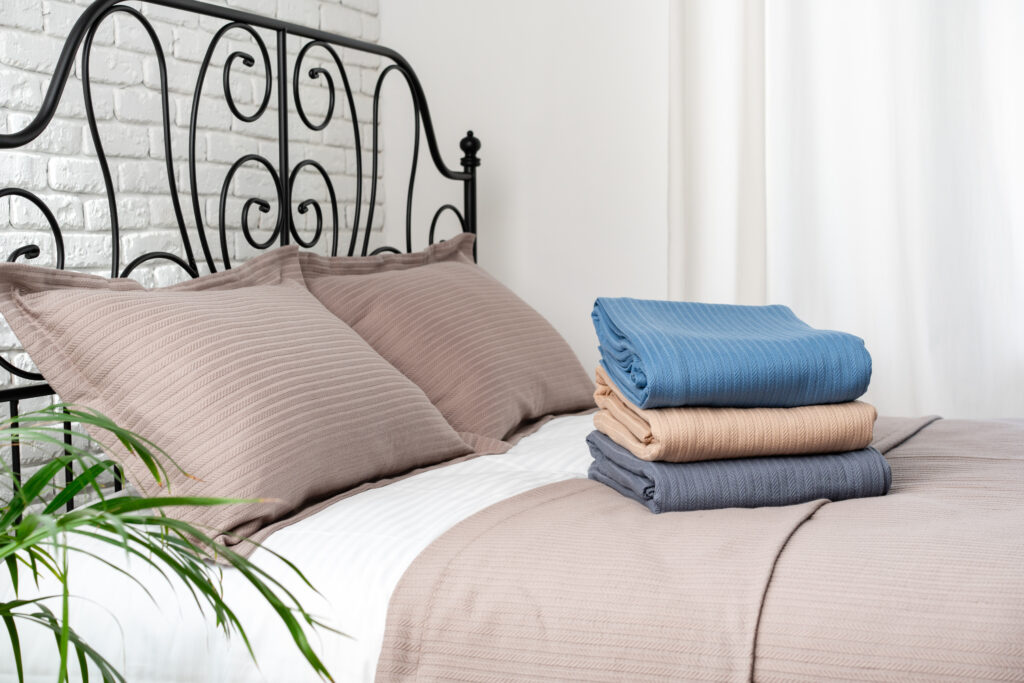
A favorite quilt
A lightweight blanket for layering
A heavier blanket for colder months
Familiar textures trigger comfort and memory. A well-loved blanket can ease anxiety more than most people realize.
If safety is a concern, avoid overly heavy bedding that could create mobility challenges when getting out of bed.
Bedspreads and Comforters
Keep it clean and manageable.
Choose:
Lightweight comforters
Machine-washable materials
Solid or simple patterns
Avoid:
Heavy, oversized bedding that drags
Long bed skirts that create tripping hazards
Function over fluff.
Waterproof Protection. Quietly Smart.
Even if incontinence is not currently an issue, consider:
A waterproof pillow protector
Choose breathable options that do not feel plastic. This protects the mattress and simplifies cleaning without sacrificing comfort.
Consider Bed Safety
Depending on mobility, you may also want to ask about:
Bed rails
Lower bed height options
Nightlights near the bed
Non-slip rugs with proper backing
Bedding should never increase fall risk. Keep pathways clear. Avoid excess fabric on the floor.
Rotate Seasonally
Do not overcrowd the small space with every blanket owned since 1985.
Store off-season bedding at a family member’s home and rotate as needed.
This keeps closets manageable and prevents clutter.
The Emotional Side of Bedding
A bed is where someone:
Starts their day
Ends their day
Rests when not feeling well
Thinks
Prays
Recovers
It is more than furniture.
Familiar bedding reduces the feeling of displacement. It says, “This is still your space.”
Bottom Line
Bring:
A favorite pillow
Soft personal sheets
A meaningful blanket or quilt
A mattress topper, if needed
Protective covers
Skip:
Excess decorative layers
Heavy or complicated bedding
Anything that creates fall risk
Sleep is foundational to quality of life. In assisted living, comfort is not a luxury. It is a necessity.
Choose bedding that supports rest, dignity, and peace of mind.