
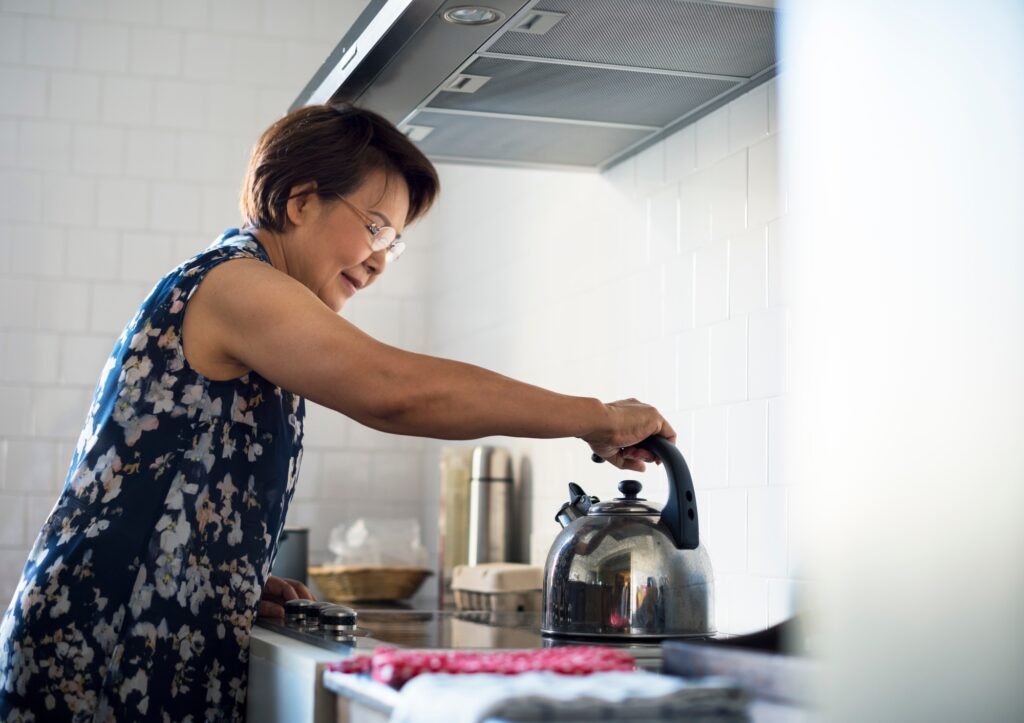
If you’ve ever paused outside your aging parent’s kitchen, listening for the clatter of a dropped pan or the slip of a knife, you already understand why this topic matters. The kitchen is the heart of the home, but it can also become one of the most hazardous rooms for an older adult. Choosing safe kitchen utensils for elderly loved ones is one of the simplest, most loving changes you can make — a quiet upgrade that protects independence, reduces fear, and keeps the joy of cooking alive for the people you love.
Whether your loved one is aging in place, recovering from a hospital stay, or simply finding that arthritis and reduced grip strength are starting to make familiar tools feel risky, the right kitchen gear can make an enormous difference. This guide walks you through what to look for, what to replace first, and how to talk about the change without making a proud parent feel like they’re losing ground.
Why Safe Kitchen Utensils for Elderly Loved Ones Matter More Than You Think
Kitchen injuries are one of the most common reasons older adults end up in urgent care. Slips with knives, burns from heavy cookware, and falls caused by reaching for a high shelf account for a striking percentage of preventable home accidents. As we age, grip strength can decline by as much as 50 percent between the ages of 60 and 80, while vision, balance, and reaction time all shift in subtle ways. The tools that worked beautifully at 55 may not be safe at 80.
The good news: small, thoughtful swaps in the utensil drawer often eliminate the highest-risk moments without forcing your loved one to give up cooking. And cooking matters — it’s tied to nutrition, dignity, memory, and the simple pleasure of feeding the people you love.
Common Kitchen Hazards Older Adults Face Today
Before you shop, walk through the kitchen with your loved one and notice where they hesitate or wince. Common trouble spots include sharp paring knives with thin handles, heavy cast-iron skillets, slippery glass mixing bowls, twist-top jars, can openers that require two strong hands, and stovetop kettles with weak handles. Even something as ordinary as a peeler can become a daily source of small cuts when arthritis is in the picture. Naming the hazards out loud is the first step — and it usually opens the door to a calm conversation about replacements.
Knives Designed for Aging Hands
A good knife is the cornerstone of any safer kitchen. Look for blades with rocker-style cutting motions, which let the knife do the work without requiring a strong downward push. Ceramic knives are lightweight and stay sharp longer, though they can be brittle if dropped. For seniors with significant grip issues, an angled or “right-angle” knife handle keeps the wrist neutral and dramatically reduces strain. Pair the knife with a non-slip cutting board — silicone-backed boards are inexpensive and stay put on the counter.
One of the most overlooked safety tips: a sharp knife is safer than a dull one. Dull blades slip. Either invest in a quality sharpener or buy knives with replaceable blades.
Easy-Grip Cutlery and Utensil Handles
Standard forks, spoons, and serving utensils have thin metal handles that can be painful to grip with arthritic hands. Adaptive cutlery has thicker, cushioned handles — often made from soft rubber or weighted silicone — that distribute pressure across the palm rather than concentrating it on the fingers. Weighted utensils are also a great choice for loved ones with mild tremors, including those living with Parkinson’s or essential tremor, because the added weight helps steady the hand.
You can find adaptive flatware sets at most occupational therapy supply stores and online. Some of the most popular brands include built-up handles you can slide onto existing utensils, which preserves the familiar feel of the kitchen.
Stable Bowls, Plates, and Mixing Tools
Mixing bowls that slide across the counter are a recipe for spills, burns, and frustration. Look for bowls with non-slip silicone bases or suction-cup bottoms. The same principle applies to dinner plates — plates with raised edges or “scoop” rims help food stay on the plate and make one-handed eating much easier. For loved ones with cognitive decline or dementia, high-contrast plates (a bright red or blue plate with light-colored food) have been shown in multiple studies to improve appetite and meal completion.
Adaptive Cooking Tools That Reduce Risk
Once you’ve handled cutlery and bowls, take a look at the everyday gadgets your loved one reaches for most. A few worth considering: spring-loaded scissors and shears that open themselves between cuts, long-handled tongs that keep hands away from heat, silicone oven mitts that protect to higher temperatures than fabric ones, pre-measured medication-style spoons for portion control, and a jar opener mounted under the cabinet — these grip lids and require almost no hand strength. Each of these tools costs less than a dinner out, and any one of them might prevent a fall, burn, or trip to the ER.
Safe Can Openers and Jar Openers for Seniors
Few kitchen tasks frustrate older adults more than opening a stubborn can or jar. Traditional can openers require pinching, twisting, and rotating all at once — a combination that becomes nearly impossible with weak grip strength or arthritis. Modern electric or one-touch can openers do the entire job with the press of a single button and leave a smooth, safe edge with no sharp lid to handle. Under-cabinet jar openers and silicone grip pads are similarly inexpensive and life-changing. If your loved one has stopped buying canned goods because they “can’t open them anymore,” this is one of the highest-impact swaps you can make.
Lightweight, Heat-Resistant Cookware Choices
That beloved cast-iron Dutch oven might weigh eight pounds before it’s even full of soup. Lifting it from the stovetop to the table — especially when full and hot — is one of the most common causes of kitchen burns and falls in older adults. Encourage a gradual swap to lighter cookware: anodized aluminum, ceramic-coated nonstick, or even high-quality enameled steel pans. Look for pots with two handles instead of one long handle, which lets your loved one carry with both hands and keeps the load balanced.
Induction cooktops are another worthwhile upgrade if budget allows. The surface stays cool to the touch, the heat shuts off the moment the pan is removed, and there’s no open flame — a meaningful reduction in fire risk for anyone with memory concerns.
Tools That Help with Vision and Cognitive Changes
Safe kitchen utensils for elderly users sometimes means tools that compensate for changes beyond just strength. Talking timers, large-print measuring cups, and color-coded measuring spoons all help when eyesight starts to slip. Auto-shutoff kettles and pots with built-in timers protect against the most common dementia-related kitchen risk — a stove left on. For loved ones with mild cognitive impairment, consider labeling drawers and cabinets with both words and pictures so the most-used tools stay easy to find.
How to Set Up a Senior-Friendly Kitchen Drawer
Once you’ve gathered the right tools, the next step is making them easy to reach. The most-used utensils should live between waist and shoulder height — never on a top shelf that requires a step stool. A shallow, well-organized drawer with one tool per slot is much safer than a tangled bin where reaching in could mean grabbing a blade. If your loved one struggles with drawer pulls, stick-on D-shaped handles can be added in minutes and are far easier on arthritic fingers.
This is also a good moment to remove what’s no longer safe. Donate the heavy cast iron, the chipped ceramic knife, the sticky old can opener. A clear, simple kitchen reduces decision fatigue and keeps the safest tools front and center.
Talking with Your Loved One About Switching Utensils
The conversation matters as much as the gear. No one wants to be told they can’t use their favorite knife anymore. Lead with curiosity rather than concern: “I saw this lightweight pan and thought of you — want to try it?” Frame the new tools as upgrades, not replacements for diminished ability. Many older adults are proud of running a smooth kitchen, and the right pitch is that these are the tools serious cooks and pros are using now.
If a loved one resists, start small. One swap — a single jar opener, one rocker knife — can build trust. The goal isn’t a kitchen makeover in a weekend; it’s a gradual, respectful shift toward tools that keep cooking joyful.
A Small Change That Makes a Big Difference
Choosing safe kitchen utensils for elderly loved ones isn’t about taking anything away. It’s about preserving the parts of cooking that bring meaning — the Sunday sauce, the holiday cookies, the cup of tea at the window — while quietly removing the parts that have started to hurt or scare. A few thoughtful swaps in a single drawer can keep your parent or grandparent independent, confident, and safe in their own kitchen for years longer.
If you’re not sure where to start, pick the tool your loved one uses every single day and make that one swap this week. One safer knife. One easier can opener. One non-slip cutting board. That’s it. Then watch what happens — most caregivers tell us that a single change opens the door to dozens more, and the kitchen slowly transforms from a place of worry into a place of warmth again. That’s exactly what your loved one deserves.